Important update: New enrollments will be $530/month starting June 10. Existing clients stay at $430/month.
If you’ve ever pictured neurofeedback as something out of a sci-fi movie—wires, zapping, or mind control—you’re not alone.
The truth? At-home neurofeedback is surprisingly simple, totally non-invasive, and even kind of relaxing.
Here’s what really happens during an at-home neurofeedback session, from the moment you sit down to what’s actually happening in your brain.
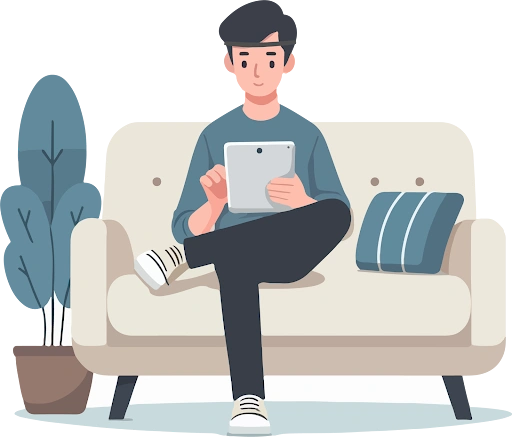
One of the biggest perks of at-home neurofeedback is convenience. Most clients train from the comfort of their own home—no commute, no fluorescent lights, no waiting room small talk. Just a quiet space, your neurofeedback headset, and a device.
You’ll slip on the headset (we guide you through setup), open the app, and you’re ready to go. It’s as easy as putting on a pair of headphones.
Your neurofeedback headset uses small sensors—nothing pokes, shocks, or goes into your body. These sensors read your brainwave activity in real time, like a heart rate monitor for your brain.
The goal of neurofeedback is to help your brain learn how to move into more balanced, self-regulated patterns. Whether that means improving focus, lowering anxiety, boosting emotional regulation, or sleeping better, the system provides your brain with the information it needs to move in the right direction.
Here’s where it gets interesting.
You can choose to watch a show, listen to music, or play a simple game. But here’s the twist: the audio or visuals only play smoothly when your brain is operating in an optimal state.
Your brain wants the stimulation to continue, so it naturally adjusts itself to stay in the “good zone.” Over time, this subtle reinforcement creates lasting change in your brain’s default patterns—even outside of sessions.
It depends on your brain’s unique starting point, but here are some common training goals:
This is brain training—not brain changing. We’re not forcing anything or “controlling” your brain. We’re simply providing gentle, real-time feedback so your brain can make better decisions on its own.
That’s it. You unplug, go about your day, and your brain continues practicing the patterns it learned. Over time, the effects build—just like strengthening a muscle with regular workouts.
Whether you’re a student with ADHD, a parent dealing with burnout, or just someone looking to boost brain performance—at-home neurofeedback makes brain health easier than ever.
📌 Curious if neurofeedback could help with your focus, mood, or sleep?
A: Yes—at-home neurofeedback is completely safe and non-invasive. The sensors only read your brain’s electrical activity; nothing goes into your body. There are no shocks or side effects. It’s similar to how a heart monitor reads your pulse, but for brainwaves.
A: We provide you with a BrainBit headset and access to our at-home training platform. All you need is a quiet space, a reliable internet connection, and a device like a tablet or laptop. We’ll walk you through the setup step by step.
A: The screen gives your brain real-time feedback. When your brain is in an optimal state, the screen plays smoothly. When your brain slips into dysregulation, the screen flickers or dims. This encourages your brain to self-regulate over time.
A: Nope—there’s no physical sensation. Most people say they feel calm, relaxed, or even slightly energized afterward. Some notice small changes after just a few sessions; others notice results more gradually.
A: Yes! Many of our clients are children or teens working on focus, anxiety, or emotional regulation. The process is engaging, safe, and tailored to their developmental needs.
A: Every brain is different, but most people begin noticing changes within the first 10–15 sessions. A typical program lasts 30–40 sessions to support long-lasting improvement. We monitor and adjust your training as needed along the way.
A: Clients use neurofeedback to support a wide range of goals, including:

Quick, practical brain insights from NeuroClinic — just 2x a month ✨
Want simple tips for a calmer, more focused brain?
Join our mailing list.
Thank you for subscribing!
You’re in! Don’t forget to check your promotions.