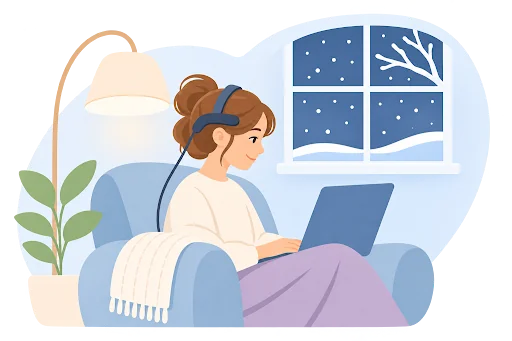
With the clocks turned back and darker evenings arriving, the New York provider’s remote program lets children and adults keep up regular training sessions without leaving the house.
MONSEY, N.Y., November 5, 2026. Daylight saving time ended on Sunday, and across much of the country it is now dark before many people finish work or school. For anyone who relies on regular appointments, the change makes after-school and evening sessions harder to keep. That is especially true for parents driving children across town in cold weather and heavy traffic. NeuroClinic USA, a neurofeedback provider based in Monsey, New York, is reminding families and individuals that its program takes place entirely at home. Clinicians guide the program remotely.
The company has worked with clients since 2018 and has supported hundreds of people remotely across the United States. Its program serves children from age 4 and adults of any age. It focuses on ADHD, anxiety, trauma, depression and learning disabilities, as well as goals such as focus and emotional regulation.
NeuroClinic USA builds its program around a steady schedule. The recommended routine is four sessions a week, each lasting 30 minutes, although the clinical team can set a customized schedule where needed. Maintaining that routine is much easier when sessions can take place in the living room or a quiet bedroom, without the need to travel to a clinic.
Winter puts pressure on routines in other ways too. Thanksgiving, school breaks and holiday travel can all interrupt weekly plans between now and the new year. With neurofeedback therapy at home, the equipment stays with the client. Sessions can be planned around these events instead of being canceled because a clinic is closed or a drive is not practical. The company ships its equipment to any address, including outside the United States.
Enrolling in the program begins with a delivery rather than an appointment. NeuroClinic USA sends a professional-grade headset to the client’s address, and it usually arrives within three to seven working days. The company is clear that its service is not an app. The training uses dedicated equipment, and a clinician leads the first assessment.
That first assessment lasts about 30 minutes and takes place over a video call. A clinician walks the client, or the parent and child, through the process while the headset records brain activity. The team then reviews the resulting brain map within 24 to 48 hours and uses it to build a personalized training plan. On its ADHD page, the company explains why this step matters: no two brains are alike, so the plan is based on the individual’s own map rather than a one-size approach.
Once training begins, the clinicians keep watching. They review each client’s progress and adjust the plan as needed. Every client also has a monthly meeting with a social worker, which gives families a regular, scheduled time to discuss progress, concerns and any changes at home or school.
The model depends on the people supporting it. NeuroClinic USA’s team includes licensed clinical social workers who work with children, teens, families and adults. One of them has nearly two decades of clinical experience and holds advanced certification in trauma and dissociation. The team also includes a QEEG-guided neurofeedback practitioner who builds individual protocols from EEG assessment data, working alongside a licensed clinical social worker.
Behind the clinical staff, a remote client coordinator tracks progress through each client’s session data. A technical support advisor helps clients set up and run their home systems, and an administrative manager oversees clinic operations. Families trying at home neurofeedback for the first time often worry about being left alone with a device and no one to call. That support structure answers the concern.
Testimonials published on the company’s website come from clients in New York, Massachusetts, Maryland, Florida, California and Utah. The service covers a range of needs. Dedicated pages address ADHD, anxiety, trauma and depression, and the program also works with clients who have learning disabilities. The company describes neurofeedback as a way of learning how to create healthier brain patterns.
NeuroClinic USA states in its disclaimer that its services are not intended to diagnose, treat, cure or prevent any medical or psychological condition. Clients are encouraged to speak with their healthcare provider.
The program is priced at $530 a month, with no long-term contract, and clients can cancel at any time. NeuroClinic USA backs the first month with a money-back guarantee. Clients who complete four sessions a week for 30 days and do not feel better can request a refund under the conditions set out in the company’s terms of service.
Many households are already managing holiday costs. A monthly model allows families to start neurofeedback at home, see how it fits into their daily routine, and review their progress with the clinical team before deciding whether to continue into the new year.
NeuroClinic USA also works with mental health practitioners through its Thrive program. Thrive gives therapists professional-grade equipment, personalized training and ongoing clinical support, so they can add neurofeedback to their practice without the expense of buying equipment. Therapists book a trial with a deposit and can return the equipment within seven days if they decide not to continue. With many practices planning their services for 2027, the program gives therapists a way to test neurofeedback with their own clients before the new year.
Neurofeedback is a type of brain training that uses EEG readings to show a person how their brain is responding, so they can learn to adjust it over time. Many people now meet their therapists and doctors by video, and NeuroClinic USA applies the same remote approach to neurofeedback. It keeps the parts of a clinic that matter most and moves the sessions themselves into the home. Those parts are an assessment, a personalized plan, ongoing clinical review and a regular check-in with a social worker.
As the evenings get darker and the calendar fills up, families and adults who want a steady routine through the winter can complete the assessment and begin training in the comfort of their own home.
Want simple tips for a calmer, more focused brain?
Join our mailing list.