As families review first-quarter report cards and adults prepare for the busy season ahead, the Monsey, New York provider is enrolling children and adults in its remote neurofeedback program.
MONSEY, N.Y., November 3, 2026 — November is a checkpoint month for many American households. Parents are attending fall parent-teacher conferences and reviewing the first report cards of the school year. Adults are juggling the demands of the busy season ahead, from travel and family gatherings to year-end deadlines. For those interested in neurofeedback but unable to fit regular clinic visits into their schedules, NeuroClinic USA offers an alternative: a clinician-guided program that brings professional-grade equipment and ongoing clinical oversight directly into the home.
NeuroClinic USA has worked with clients since 2018. Its program supports children and adults seeking help with challenges related to ADHD, anxiety, trauma, depression and learning disabilities, as well as broader goals such as improving focus and emotional regulation. The company reports having supported hundreds of clients remotely across the United States. Its services are available to children as young as four, with no upper age limit.
The concept is straightforward. Traditional neurofeedback typically requires regular appointments at a clinic, which can be difficult to maintain for working parents, busy students and individuals living far from a provider.
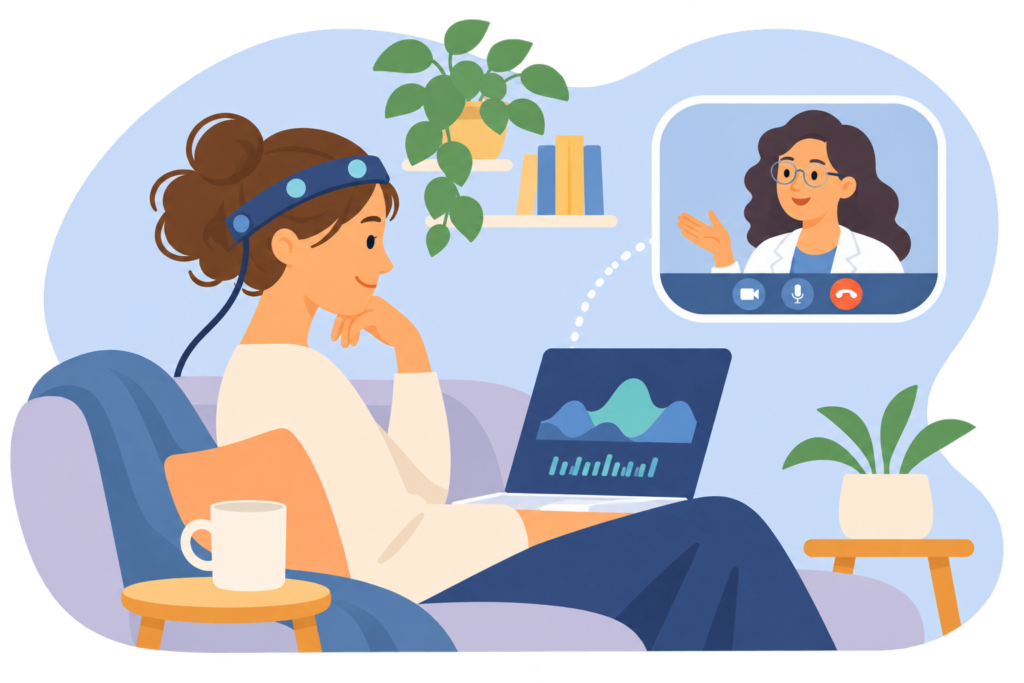
NeuroClinic USA offers an at-home neurofeedback program designed to provide the structure and professional oversight of a clinical setting without the need for in-person visits. Clients use professional-grade equipment, undergo a clinician-guided assessment and receive personalized training plans that are monitored and adjusted as they progress.
For families exploring their options this fall, neurofeedback at home eliminates the commute, waiting room and need to take time away from work or school for each session. Training can fit around homework, after-school activities and evening routines. The portable equipment also allows clients to maintain their training schedules while traveling or spending time away from home.
The process begins with enrollment. NeuroClinic USA ships a headset directly to the client, with delivery typically taking three to seven business days. Once the equipment arrives, the client schedules a 30-minute at-home assessment, guided by a clinician over a video call.
The assessment produces a brain map, which the clinical team reviews within 24 to 48 hours. Based on the findings, clinicians develop a personalized neurofeedback training plan.
The recommended schedule is four 30-minute sessions per week, although schedules can be customized to accommodate individual needs.
Throughout the program, clinicians monitor each client’s progress and make adjustments as needed.
The company’s clinical team includes licensed clinical social workers who work with children, teens, families and adults. One brings nearly two decades of experience and advanced certification in trauma and dissociation. A QEEG-guided neurofeedback practitioner uses EEG assessment data to build individual training protocols and works alongside a licensed clinical social worker. A remote client coordinator tracks progress through the data each client generates, and a technical support advisor helps clients with their home neurofeedback systems.
This combination of clinical and technical support reflects how the program is meant to work. Clients are not left alone with a device. They have a clinician who sets and adjusts the plan and a support team they can contact if the equipment needs attention.
NeuroClinic USA works across several areas. On its ADHD page, the company describes neurofeedback as a way to learn how to create healthier brain patterns. It explains that no two ADHD brains are alike, which is why it maps each client’s brain before building a plan. The service also has dedicated pages for anxiety, trauma and depression, and it works with clients who have learning disabilities.
Testimonials featured on the company’s website include experiences shared by families across the country, including New York, Massachusetts, Maryland, Florida, California and Utah. The company also offers its services to eligible clients outside the United States where equipment shipping is available.
The company’s disclaimer makes clear that its services are not intended to diagnose, treat, cure or prevent any medical or psychological condition, and it encourages clients to consult their healthcare provider.
For many families, cost and commitment are the first questions. NeuroClinic USA’s program costs $530 per month and can be canceled at any time, with no long-term contract. The company also offers a 30-day money-back guarantee for clients who complete four sessions a week without feeling better. The full conditions are set out in its terms of service.
That structure lets a family try neurofeedback therapy at home for a month, review progress with the clinical team and decide from there, rather than committing to a long package upfront.
Alongside its direct-to-client service, NeuroClinic USA runs a program for therapists called Thrive. It gives practitioners professional-grade equipment, personalized training and ongoing clinical support, so they can offer neurofeedback to their own clients without buying equipment outright. Therapists can start with a seven-day trial.
Neurofeedback is a form of brain training that uses EEG readings to give a person feedback on their brain activity. Video appointments are now a familiar way for many people to meet with clinicians. NeuroClinic USA’s model combines the two. It pairs clinician-guided at-home neurofeedback with the structure of a clinic, including a comprehensive assessment, a personalized training plan, and ongoing professional guidance and support.
Some parents will have left a fall conference with questions about focus or attention. Some adults want to start the new year with support already in place. For both, the next few weeks give time to complete an assessment and settle into a routine before the holidays.
Families and individuals can learn more about the program, read client testimonials and book a consultation at https://neuroclinicusa.com/.

Want simple tips for a calmer, more focused brain?
Join our mailing list.